A breathing space, away from the screen.
Paint The Moment develops collective, analog methods that explore how shared creativity can bring people closer to the moment, to each other, and to the places they share.
A living experiment — an analog-digital counterweight to the overstimulation of our shared spaces.
See the method ↓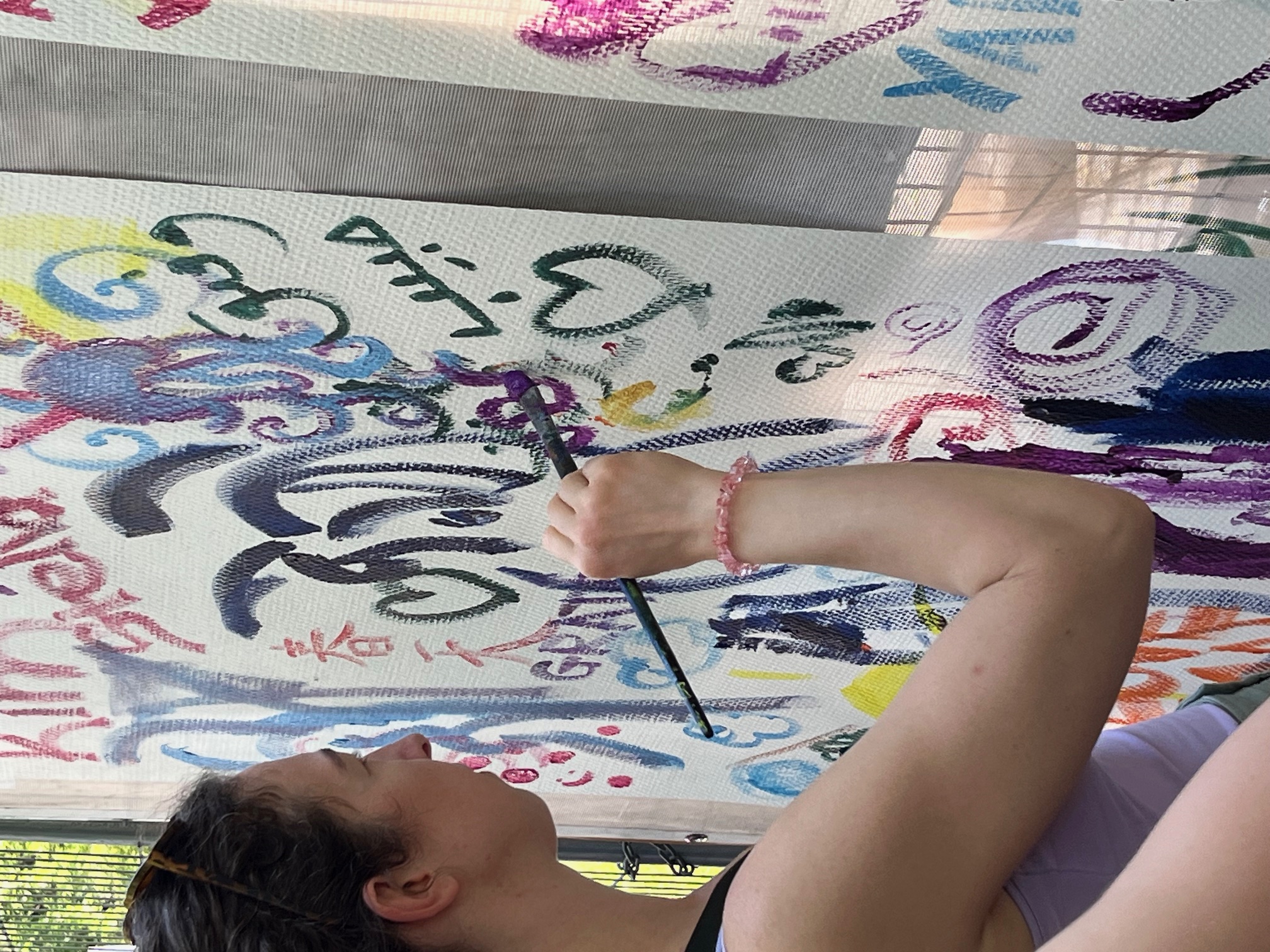
From the field study in Berlin
How we do it, in practice
It happens through a physical installation where participants put their phone down, paint together, and watch their contribution become part of something larger — for themselves, and for the place they’re standing in.
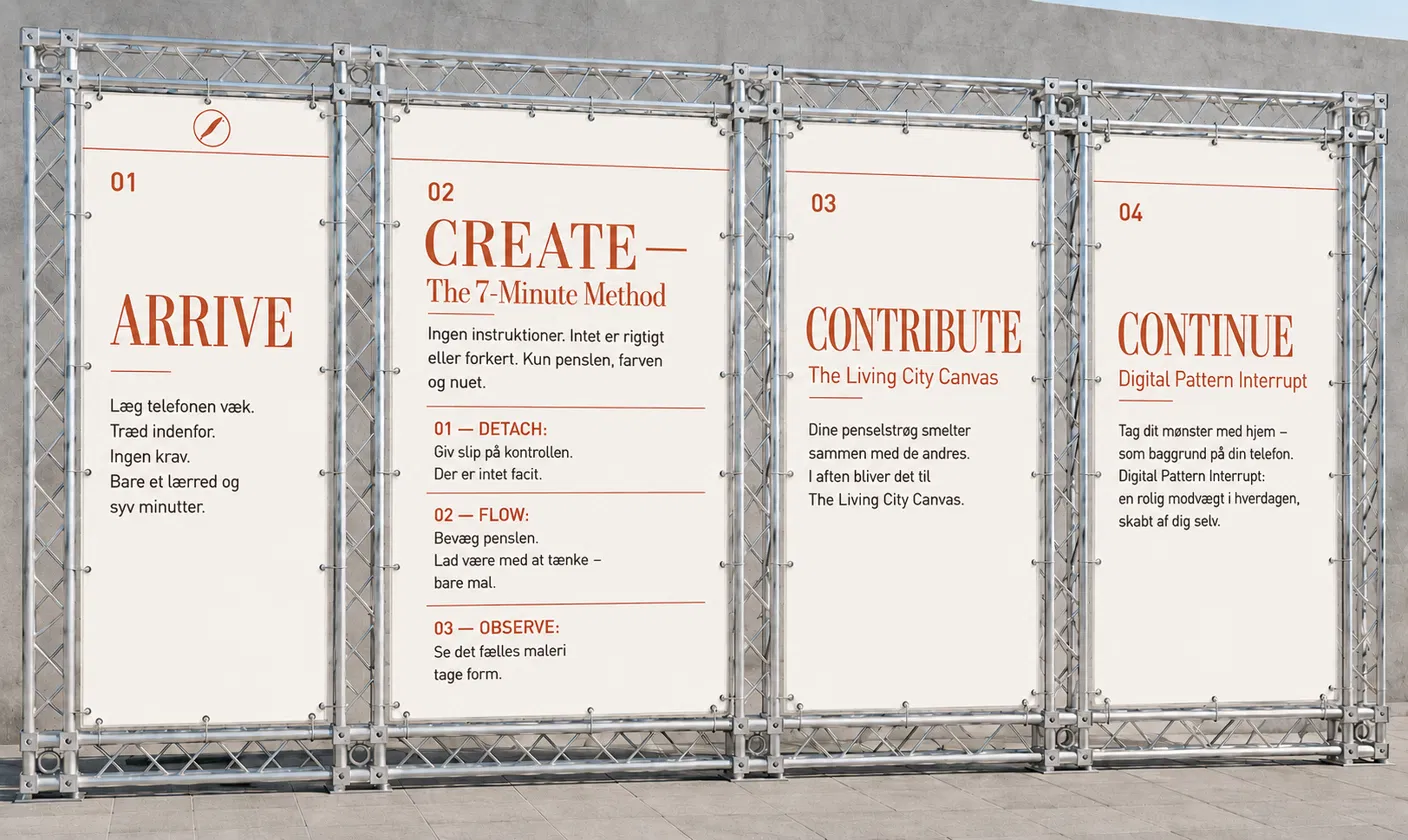
Four phases, one movement from screen to moment.
Arrive
The participant hands over their phone and steps into the space. No screen, no requirement — just a canvas and seven minutes.
Create
The 7-Minute Method. Analog painting, no instruction toward a result — just presence in the brushstroke.
Contribute
The stroke is woven together in real time with everyone else’s. In the evening, the shared work becomes The Living City Canvas — projected onto the walls of the place itself.
Continue
The participant’s own brushstroke becomes a digital pattern they take home as a phone background — what we call Digital Pattern Interrupt. We’re now studying whether, and how, it lives on in everyday life after they’ve left the space.
How we guide the participant in.
About five meters from the installation itself stands an information sign — angled slightly so it naturally guides the participant into the space. Nothing is left to chance: before stepping in, you know exactly what to expect.
The 7-Minute Method
Hesitation, turned into presence.
Seven minutes isn’t arbitrary. It’s short enough that a passerby will say yes without having to give up their day — and long enough to get through the initial hesitation and into something that feels like immersion. The method is divided into three equally deliberate steps.
The Living City Canvas
Analog presence, turned into shared light
Modern city spaces are full of speed and digital noise. With The Living City Canvas, we take the intimate, quiet moments from our physical installation and amplify them — into a visible, living gathering point for the whole city.
Digital Pattern Interrupt
A pause in screen behavior — created by an analog anchor
Smartphones are designed to constantly steal our attention. With Digital Pattern Interrupt, we turn the technology around and use the phone as a tool that protects your mental space.
The 7-Minute Method
Hesitation, turned into presence.
Seven minutes isn’t arbitrary. It’s short enough that a passerby will say yes without having to give up their day — and long enough to get through the initial hesitation and into something that feels like immersion. The method is divided into three equally deliberate steps.
01 — Detach (2 minutes)
The participant lets go of their phone and steps up to a blank canvas. No instruction, no requirement for a particular result — just a yes to the present moment.
02 — Flow (3 minutes)
The brush moves freely. No rules for color, shape, or subject — just the movement and the presence in the stroke.
03 — Observe (2 minutes)
The participant steps back and watches their contribution become part of the shared image. The individual becomes collective.
What the method isn’t: It’s not a painting class. There’s no critique, no correct technique, no requirement to produce anything aesthetically pleasing. The only requirement is presence for the seven minutes.
The Living City Canvas
Analog presence, turned into shared light
Modern city spaces are full of speed and digital noise. With The Living City Canvas, we take the intimate, quiet moments from our physical installation and amplify them — into a visible, living gathering point for the whole city.
It isn’t a passive screen or an illuminated advertising display. It’s a digital artwork created collectively through three simple steps:
01 — The analog capture
The participant physically paints with a broad brush on an endless canvas for 7 minutes. Cameras above the canvas scan and register the new brushstrokes in real time.
02 — The digital circuit
Our purpose-built software isolates and "stitches" the strokes together, weaving the individual contributions into one long, endless, flowing digital frieze.
03 — The monumental projection
When darkness falls, the day’s combined artwork is projected at a monumental scale directly onto the city’s raw façades, walls, or concrete surfaces.
From individual to community
Participants always build on a stranger’s stroke. That’s why the night projection isn’t a chaotic mess of graffiti, but a harmonious, calm artwork — direct, visual proof that citizens collaborate and look after each other’s marks.
Measurable participation and a sense of safety
Here, technology is used to strengthen physical community — not to distract from it. It gives concrete proof of how a short, creative pause can create closer bonds, a sense of safety, and new life in public space after dark.
Digital Pattern Interrupt
A pause in screen behavior — created by an analog anchor
Smartphones are designed to constantly steal our attention. With Digital Pattern Interrupt, we turn the technology around and use the phone as a tool that protects your mental space.

This is one possible look — a concept illustration, not an actual participant’s screen.
The experience travels from the physical installation straight home in your pocket, through three simple steps:
01 — The pattern takes shape
During the 7 minutes at the installation, our software captures your personal, analog brushstroke. It automatically turns the stroke into a unique digital pattern, sized to fit your phone screen perfectly.
Future direction: Longer term, we’re also exploring whether the pattern could be made stronger as a short, moving clip rather than a still image — from the first brushstroke to the finished collective work. That’s a future direction, not something we offer yet.
02 — Set as your lock screen
You receive your personal pattern via a unique link and set it as your lock screen. The standard default screen is now replaced with visual proof of your own presence.
03 — The everyday interruption
When you unconsciously reach for your phone to scroll, the screen lights up. Before you open an app, you meet your own brushstroke — an instant pattern interrupt that calls your thoughts back to the present.
No new app dependency
We don’t force people to download a new, heavy app that demands attention. Instead, we simply take over the surface where digital overstimulation usually begins — the lock screen — and turn it into a breathing space.
Measurable effect after 3 and 7 days
This is a genuine behavioral experiment. Through short, anonymous follow-ups, we measure whether the personal anchor actually reduces unconscious screen time in practice. We’ll publish the result, whatever it shows.
What we can document
What we can document is what’s already happened in Berlin and Malmö: that shared, analog creativity creates presence, connection between strangers, and an experience people choose to share and seek out again on their own. That’s the foundation. We build the rest one experiment at a time.
What we don’t know yet
No false promises about behavior: We don’t promise a measurable change in people’s screen habits. That’s exactly what we’re in the process of studying — not a conclusion we’re selling in advance.
No hasty assumptions about scaling: Nor do we promise a finished operational solution for complex environments like airports, municipalities, or large workplaces. We don’t yet know the full cost or complexity of scaling an analog experience to places like that — and we say so plainly, instead of assuming it.
This is what we’ve seen with our own eyes.
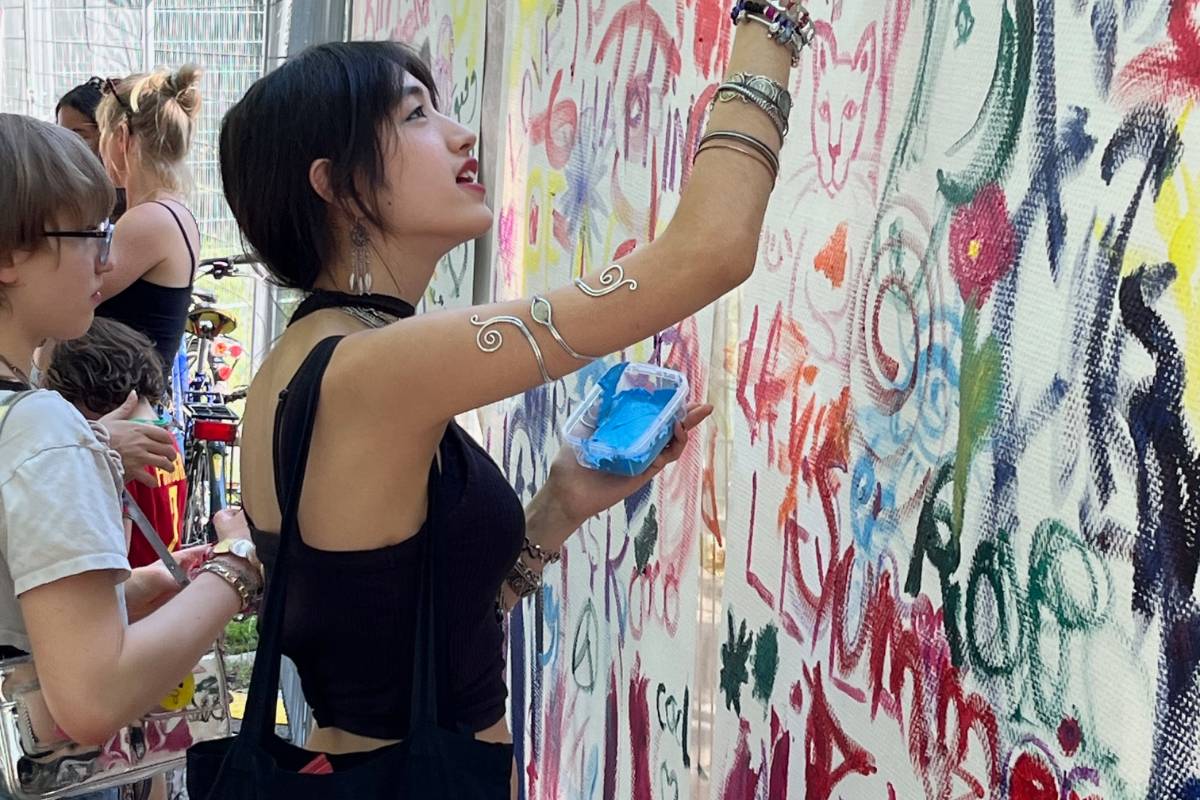
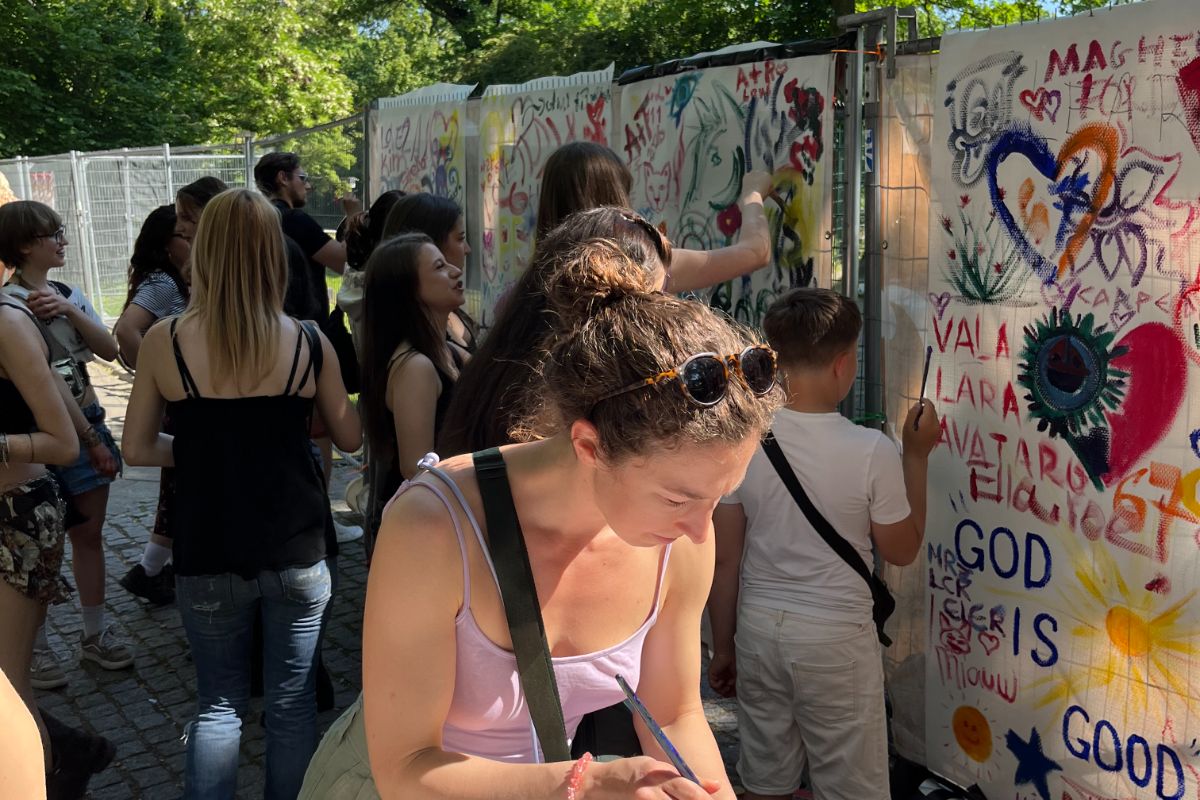
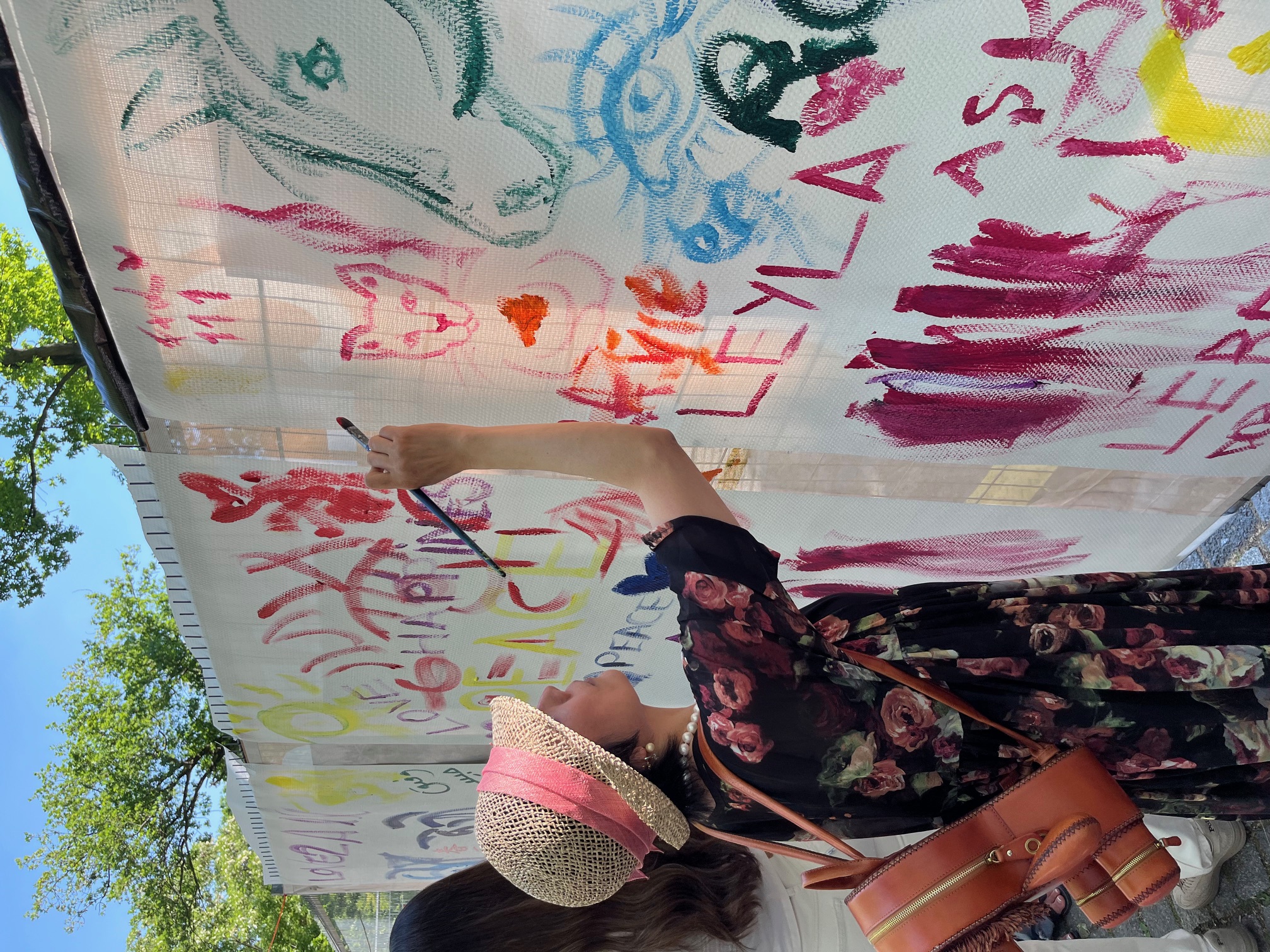
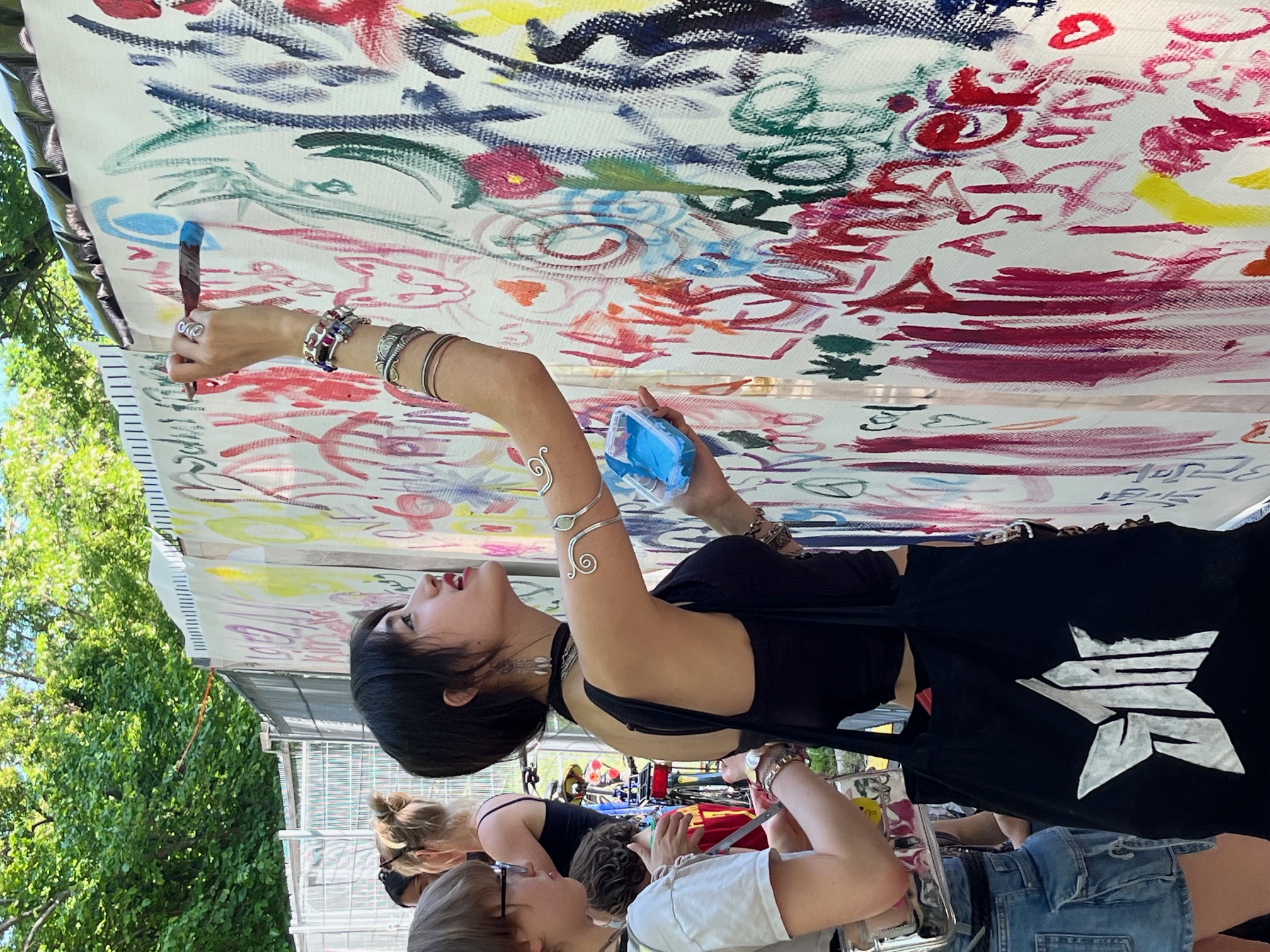
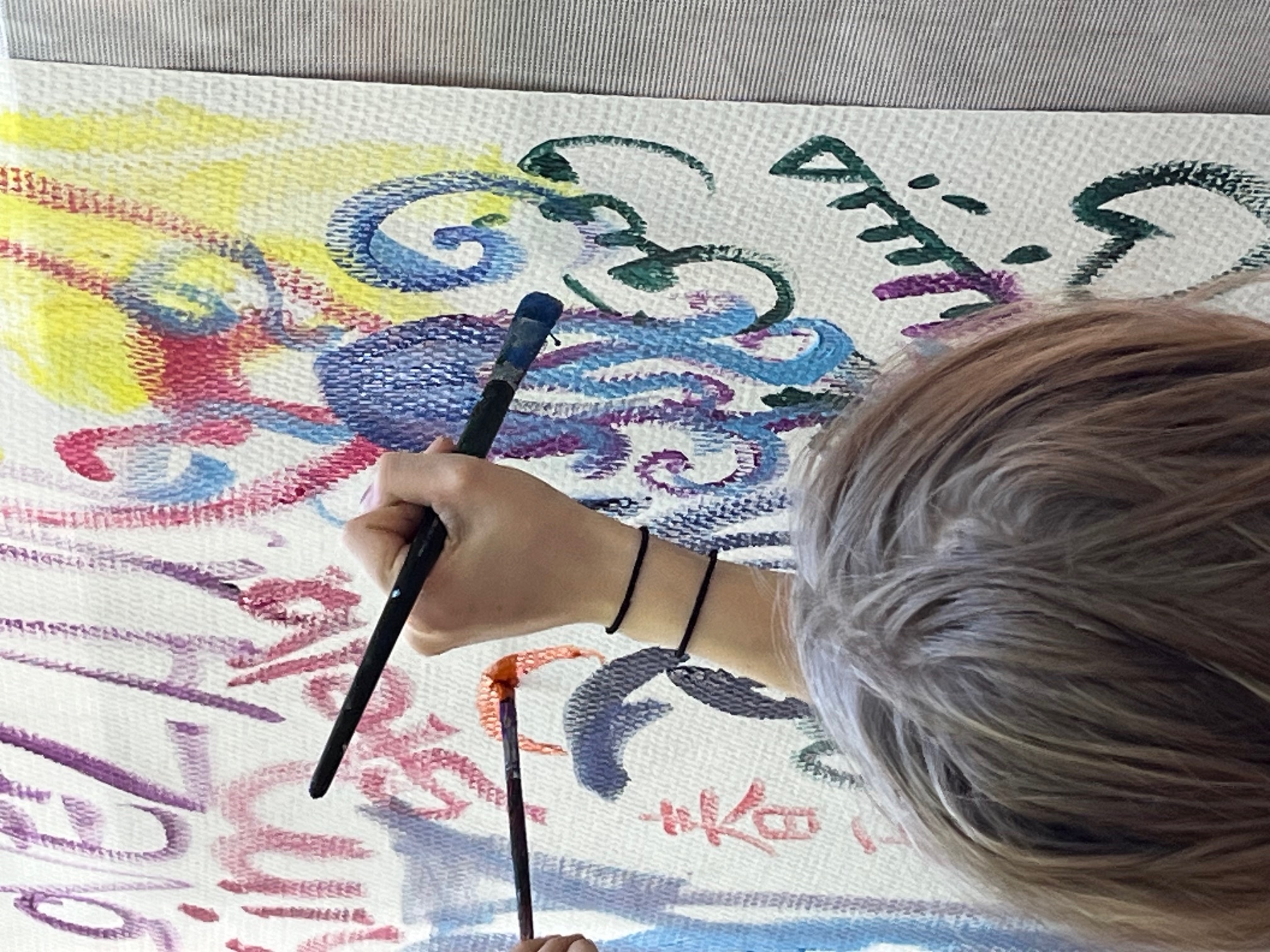
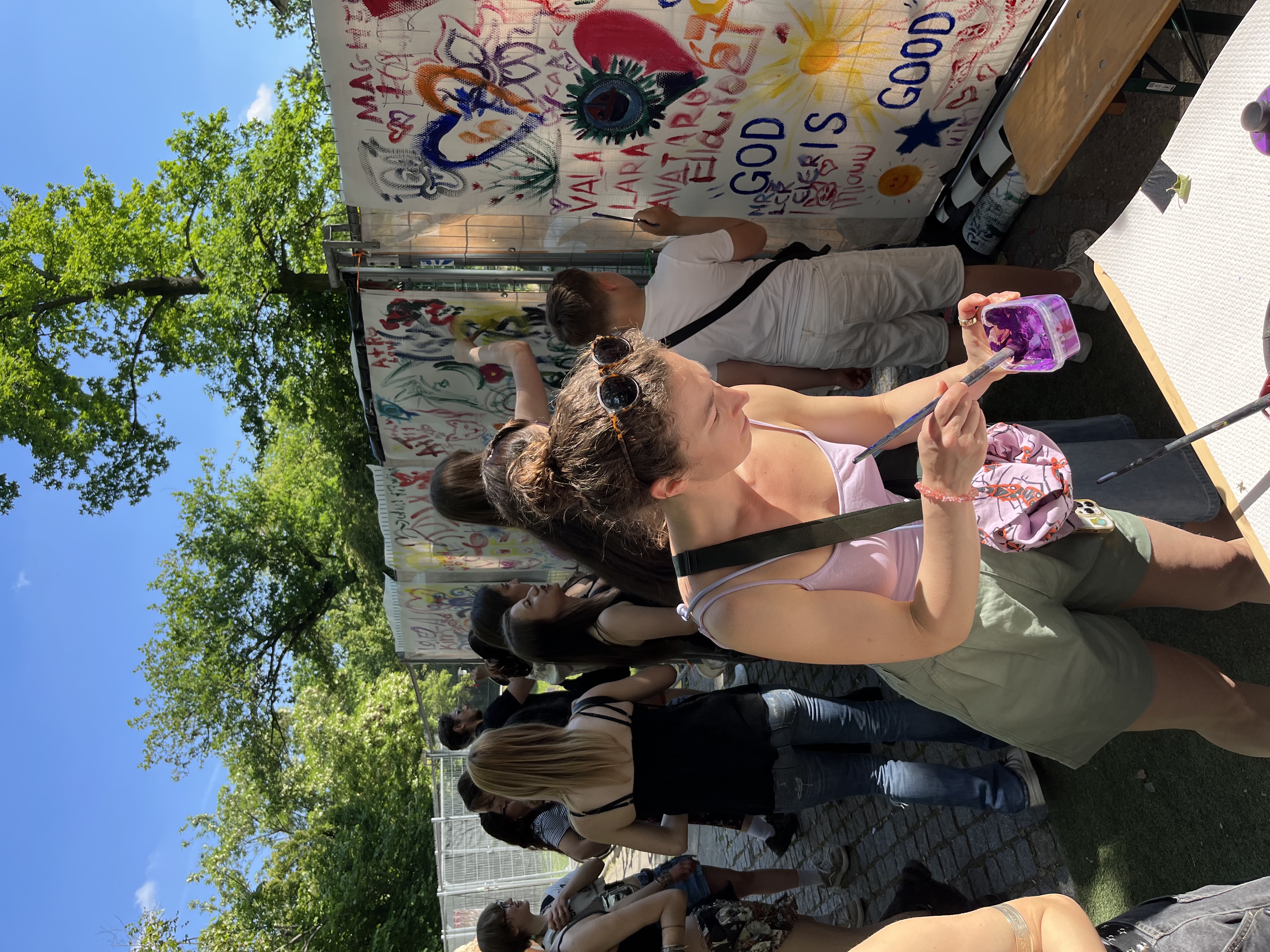
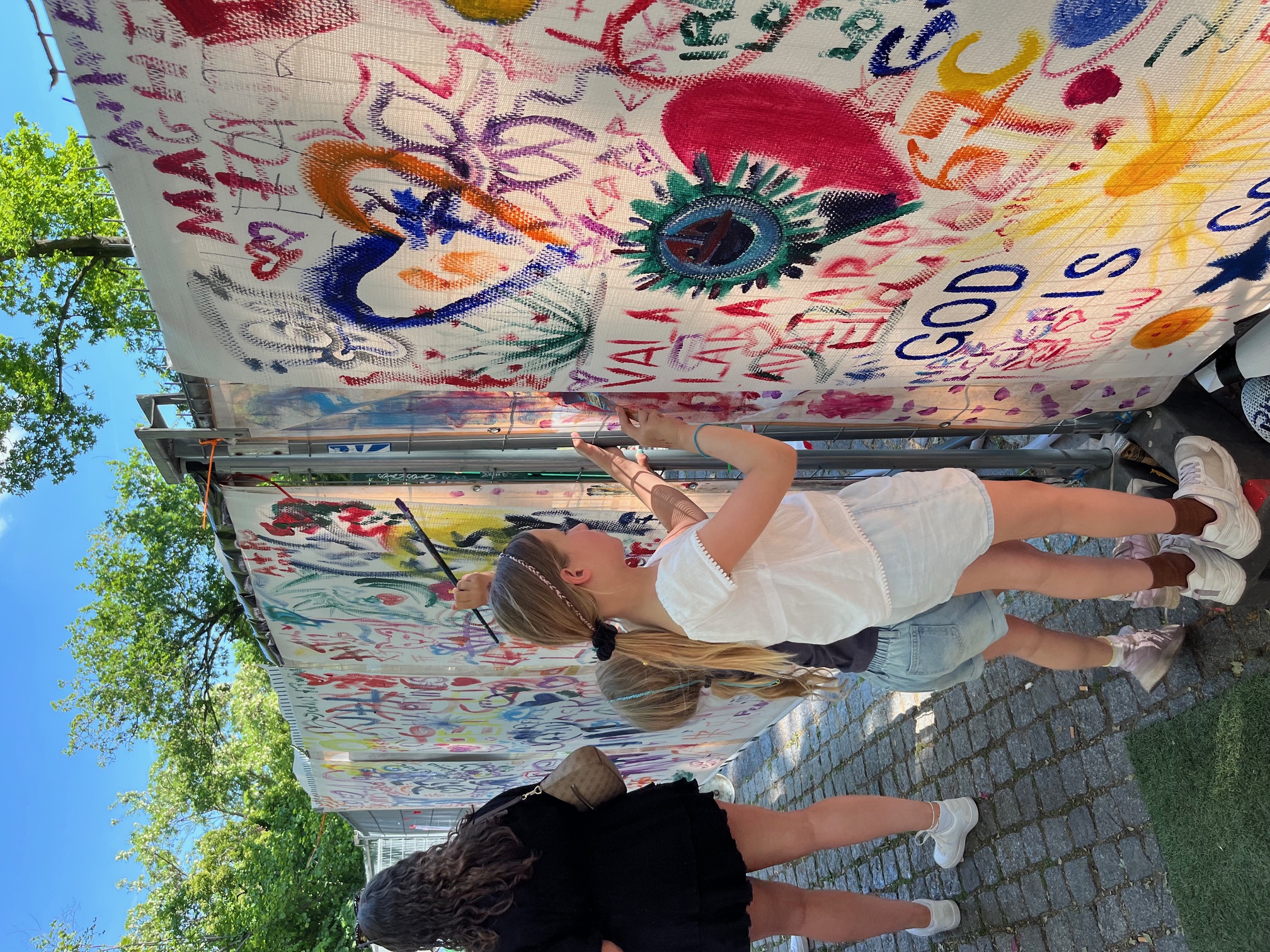
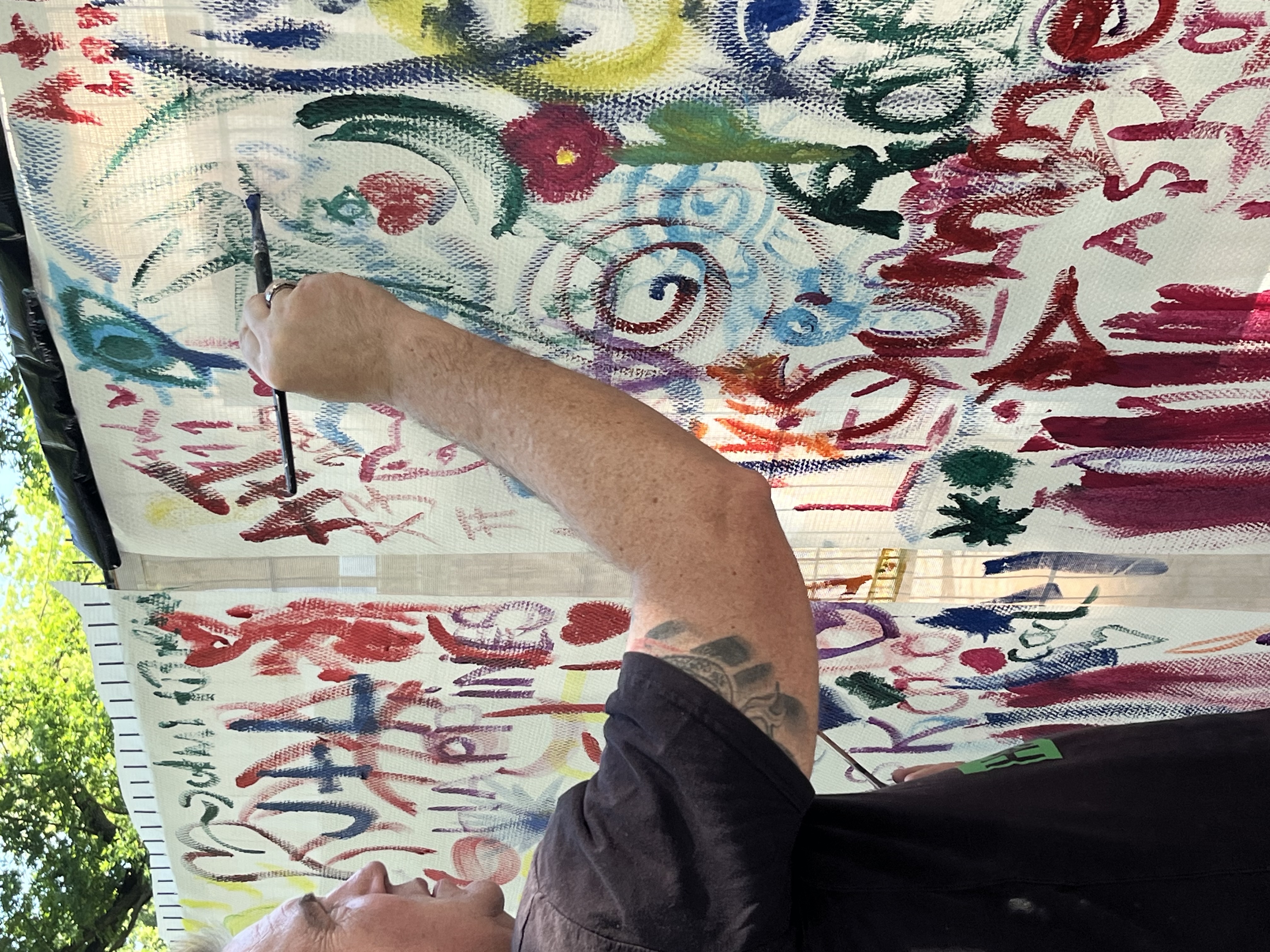
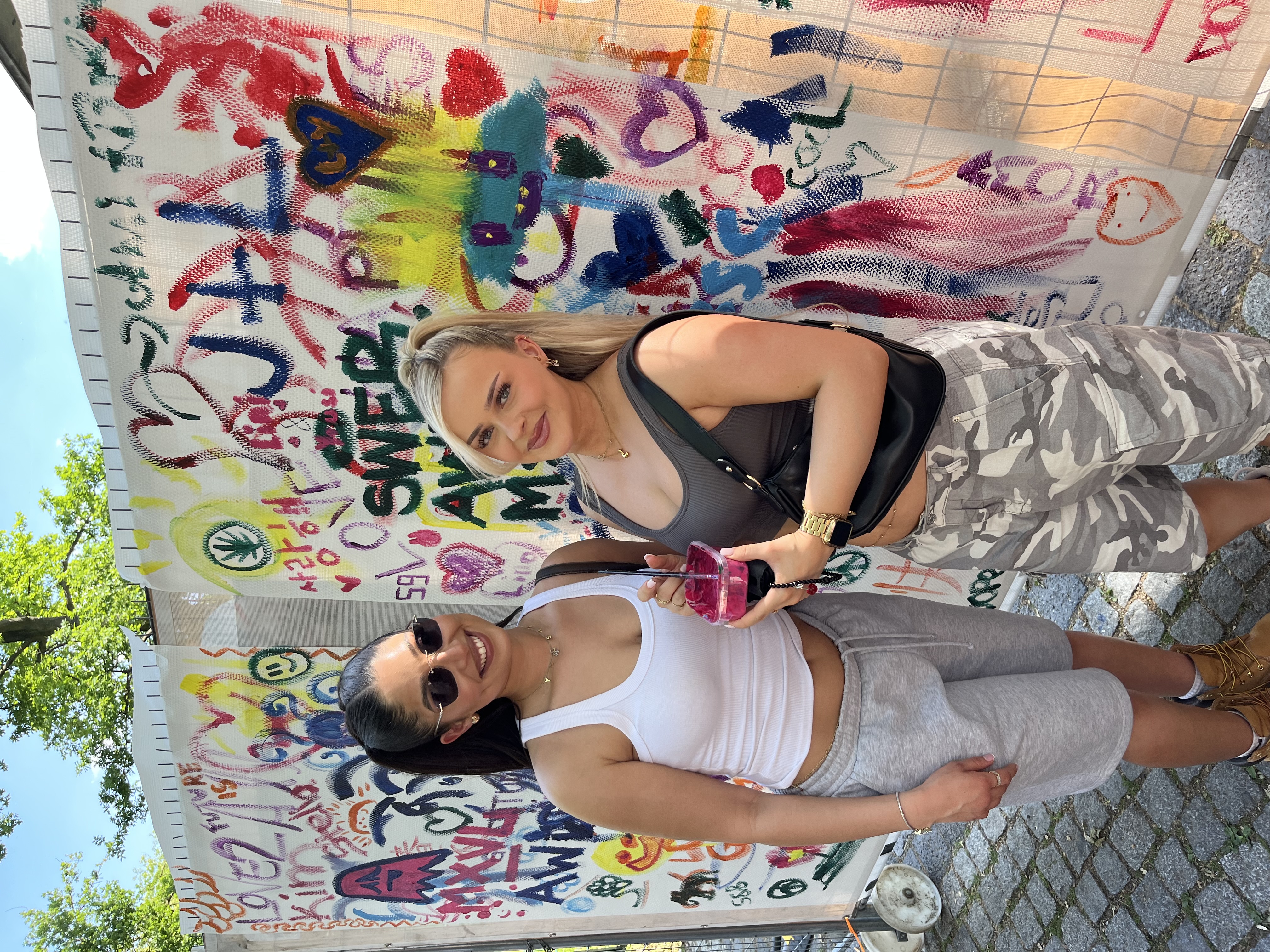
In 2024 and 2025, we ran multi-day field studies in Berlin and Malmö, including at Karneval der Kulturen in Berlin and NGBG Festival in Malmö. What we got was something clear, not a guess: people put their phones down without hesitation, paint alongside strangers for seven minutes, and something shifts in the room. Afterward, they organically share photos of their own contribution and of the collective work — without our asking.
This isn’t a hypothesis. It’s an observation we’ve made repeatedly, in two cities, over many days in the room with participants.
In our conversations with participants, the feedback was consistent — almost everyone said they’d want to try it again.
Raw footage from the field study in Berlin — participants painting together, unstaged.
The full method and our findings from Berlin and Malmö, in one document.
The people behind Paint The Moment.
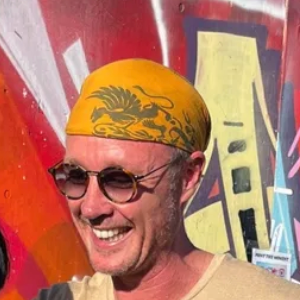
Mikkel Nielsen
Founder & Creative Director
Concept developer and founder of Paint The Moment. Works at the intersection of participatory art, experience design, and public space.
LinkedIn ↗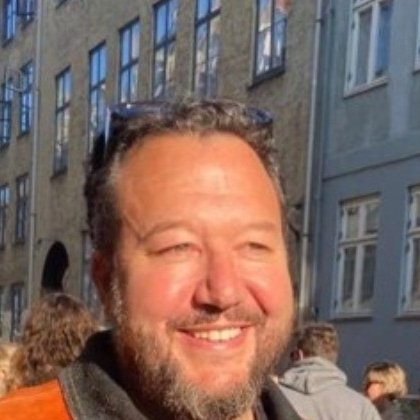
Greg Vendena
Advisor, Spatial Design & Method Principles
Architect specializing in interactive spaces. Advises Paint The Moment on the physical design of the installations and the spatial experience of The 7-Minute Method — with a focus on protecting participants' presence in the urban environment.
LinkedIn ↗Vernon Hedge
Advisor, Wellbeing & Method
Advises on how we investigate mental wellbeing and behavior in a methodologically sound way — and tests whether Digital Pattern Interrupt actually makes a difference. Vernon also handles our articles and newsletters.
The team is growing
More partners
Paint The Moment is being built with a small team of technical and expert partners. Their roles and profiles will be published once the collaboration is formally confirmed.
Images from the room, not from a showroom.
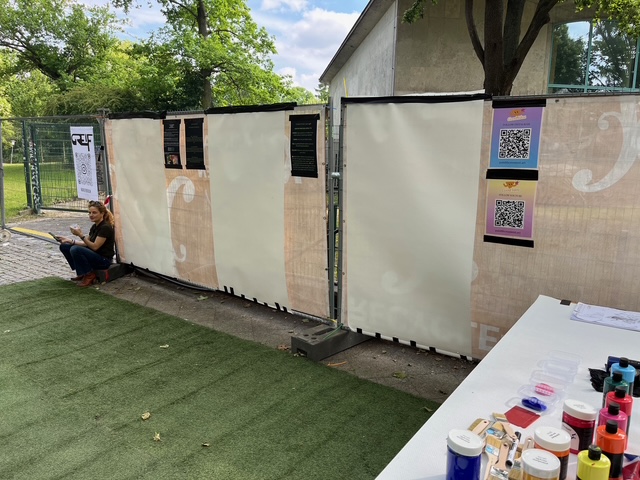
The images below are from our field studies in Berlin and Malmö — real sessions, real participants, no staged photos. Below that is also the setup of the installation itself, as envisioned for a place like Kongens Nytorv.
The installation designed for Phase 02 — see the method above
Concept sketch of the installation itself — not the final, physical design. Part of the standard setup at future installations.
We’re not looking for customers. We’re looking for co-investigators.
Paint The Moment is an association in active inquiry — not a finished deliverable. Our next field study, in autumn 2026, tests whether the personal pattern from the installation actually makes a difference in people’s everyday lives.
We invite foundations, municipal innovation funds, and cultural institutions to be part of that inquiry — not to buy a subscription to a finished solution. You get insight into the data as it forms, access to the field study from the first session, and a partnership built on what we actually find out — not what we hope for in advance.
→ Join the next field study (Autumn 2026)The 7-Minute Method, The Living City Canvas, and Digital Pattern Interrupt are concepts developed by Paint The Moment.